
Failure management vs.failure prevention
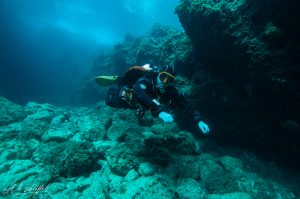
Many divers think equipment configuration is primarily about preventing failures.
And while prevention is important, it is only part of the picture.
The reality is simple:
- Failures will happen.
- Regulators fail.
- Lights fail.
- Drysuits flood.
- Masks break.
- Guidelines disappear.
- Divers become stressed.
- Visibility changes.
- Situations deteriorate.
No equipment configuration can eliminate risk completely.
The true purpose of a well-designed diving system is not to create the illusion that failures are impossible.
It is to ensure failures remain manageable when they occur.
This is one of the most important ideas within DIR philosophy.
Good systems are designed around predictable responses to predictable failures.
That is why standardization matters.
That is why equipment placement matters.
That is why team procedures matter.
When something goes wrong underwater, divers do not have unlimited time to invent solutions.
They rely on practiced responses, familiar procedures, and predictable team behavior.
Failure management is about limiting escalation.
A single failure should not automatically create a second or third failure.
Small problems should remain small.
For example, a gas-sharing procedure should not require complicated decision making.
A failed light should not create total communication collapse.
A lost mask should not destroy team awareness.
The system should absorb failures without immediately destabilizing the dive.
This is also why redundancy exists within technical diving.
Redundancy is not about carrying duplicates of everything imaginable.
It is about ensuring critical failures remain survivable.
But redundancy only works when it is integrated intelligently into a standardized system.
Poorly organized redundancy often increases confusion instead of reducing risk.
The most dangerous mindset in diving is believing that equipment alone creates safety.
Real safety comes from preparation, awareness, simplicity, and the ability to respond effectively when conditions deteriorate.
Because underwater, the question is not whether something will eventually go wrong.
The question is whether the team can still function when it does.
Ready to take the next step in your diving?
Refine your skills or explore technical diving with training tailored to your experience and goals.