Choosing the right confiuration
As divers move into advanced recreational or technical diving, equipment configuration becomes an important consideration. Two of the most common setups used today are backmount and sidemount. Both systems have proven themselves in demanding environments such as deep dives, wrecks, and caves, but each comes with its own strengths and limitations.
Understanding the differences between the two configurations can help divers choose the setup that best fits their diving goals.
What is Backmount?
In a backmount configuration, the cylinders are mounted on the diver’s back, typically using a backplate and wing system. For technical diving, this usually means a set of double cylinders connected with a manifold.
This setup has been the standard configuration in technical diving for decades and is widely used in training agencies such as Global Underwater Explorers (GUE) and InnerSpace Explorers (ISE).
Backmount systems are known for their stability and simplicity in team diving environments.
Advantages of backmount include:
- Excellent stability and trim in the water
- Large gas capacity with double cylinders
- Easy gas sharing using a long-hose configuration
- Strong standardization in many technical diving teams
- Ideal for deep decompression dives
However, backmount doubles can be heavy and cumbersome on land, and accessing valves during shutdown drills requires flexibility and practice.
What is Sidemount?
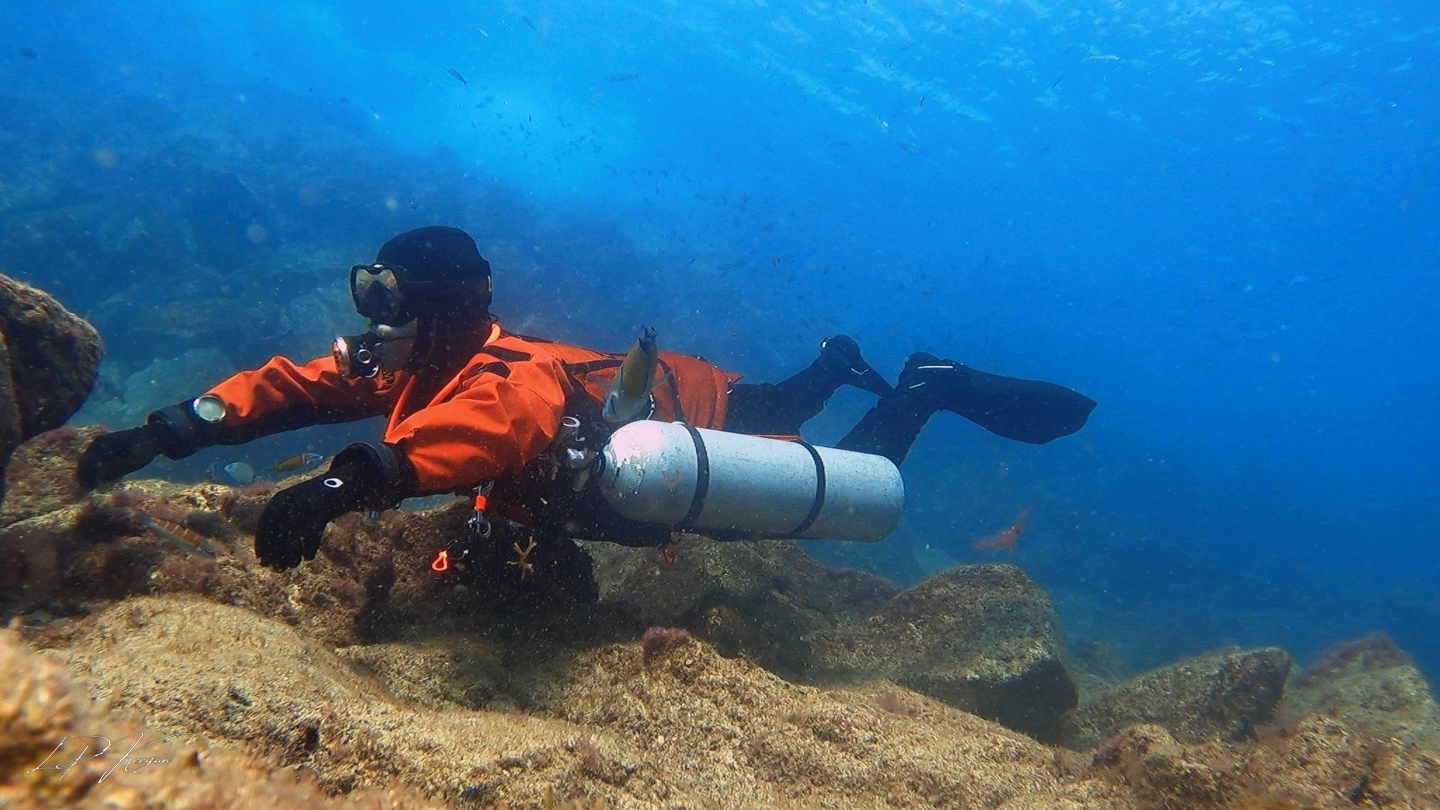
In a sidemount configuration, cylinders are mounted along the diver’s sides rather than on the back. Each cylinder is independent and attached to the harness with clips and bungee systems.
Sidemount was originally developed for cave diving, where tight restrictions sometimes make traditional back-mounted cylinders impractical.
Over the past decade, sidemount has also become popular in recreational and technical diving due to its flexibility and comfort.
Advantages of sidemount include:
- Easier equipment handling on land
- Improved access to valves and regulators
- Flexibility to remove cylinders in tight environments
- Redundancy through completely independent tanks
- Highly adjustable configuration for different body types
Sidemount can, however, require more active gas management, since divers must regularly balance the gas between the two cylinders.
Trim and Streamlining
Both systems can achieve excellent trim and streamlining when configured properly. A well-adjusted backmount setup naturally holds cylinders close to the body, while a properly tuned sidemount system allows tanks to lie parallel along the diver’s sides.
In both cases, the key is proper training and equipment setup. Poor configuration in either system can lead to instability, drag, or unnecessary task loading.
Training and Team Considerations
Another factor to consider is team standardization. Many technical diving teams prefer to use the same configuration so that equipment placement and emergency procedures remain consistent across the group.
Some training organizations focus primarily on backmount systems, while others offer dedicated sidemount programs.
Choosing the right configuration often depends on the type of diving you plan to do and the system your teammates and instructors use.
Which One is Better?
There is no universal answer to whether sidemount or backmount is better. Both systems are capable of supporting advanced and technical dives when used correctly.
In general:
Backmount is often preferred for deep decompression dives and highly standardized team diving.
Sidemount excels in environments that require flexibility, such as caves, tight wreck penetrations, or travel diving.
Final Thoughts
Ultimately, both configurations are simply tools for accomplishing the dive safely and efficiently. The most important factors are proper training, strong diving fundamentals, and choosing a system that supports the type of diving you want to do.
With the right skills and preparation, both sidemount and backmount can provide a stable, streamlined platform for advanced and technical exploration.