
The Cave doesn´t care
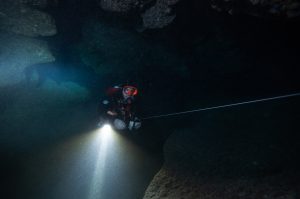
The cave does not care how many certifications you have.
It does not care how expensive your equipment is.
It does not care how many followers you have online.
It does not care how confident you feel.
It does not care what agency trained you.
It does not care how many dives you logged in warm blue water before entering overhead environments.
The cave is completely indifferent to ego.
And that is exactly why cave diving has a way of exposing reality faster than almost any other form of diving.
In open water, divers can often compensate for mistakes without immediately realizing the severity of them. Poor buoyancy, weak propulsion, bad awareness, sloppy communication, or inefficient equipment setups may create inconvenience, but they do not always create immediate consequences.
The environment is forgiving.
A diver can ascend directly to the surface.
Visibility usually remains intact.
Navigation is often simple.
Stress can be escaped relatively quickly.
A cave removes those options.
The moment a diver enters an overhead environment, the rules change completely.
- There is no direct ascent.
- There is no fast escape.
- There is no guarantee of visibility.
- There is no room for panic.
Every mistake follows the diver all the way to the exit.
That is why cave diving has never truly been about bravery.
It is about discipline.
The best cave divers are rarely the most aggressive or fearless people in the water. In fact, truly experienced cave divers are often remarkably calm, conservative, and restrained.
Because experience teaches something important:
The cave does not negotiate.
It does not forgive complacency simply because previous dives went well.
It does not reward confidence unsupported by preparation.
It does not care whether a diver “usually gets away with it.”Underwater physics remain completely indifferent to human optimism.
A guideline lost in zero visibility does not become easier to recover because a diver feels experienced.
A gas problem does not become less dangerous because someone has advanced certifications.
Poor awareness does not stop being dangerous simply because it has not caused an accident yet.
The cave strips away illusion.
It reveals whether buoyancy is truly stable or merely “good enough.”
It reveals whether propulsion is controlled or simply tolerated in open water.
It reveals whether divers actually function as a team or merely swim next to each other.
It reveals whether procedures have been internalized or simply memorized.
And most importantly, it reveals how divers respond when stress begins compressing time, attention, and decision making.
This is one of the reasons cave diving creates such a powerful mindset shift in many divers.
Eventually, divers stop trying to appear skilled.
They start trying to become difficult to destabilize.
That is a completely different mentality.
The focus moves away from performance and toward consistency.
Away from ego and toward awareness.
Away from showing capability and toward quietly controlling risk.
The cave rewards this mindset.
Not because it is generous, but because disciplined systems simply survive longer in unforgiving environments.
This is also why many experienced cave divers become increasingly minimalist over time.
Not because minimalism looks clean.
Not because it follows a philosophy.
But because complexity becomes exhausting in environments where attention is limited and consequences accumulate quickly.
Every unnecessary movement matters.
Every inefficient procedure matters.
Every distraction matters.
The cave forces divers to understand the true cost of task loading.
Stress underwater is cumulative.
A slightly unstable buoyancy problem becomes more serious while navigating restrictions.
A minor awareness lapse becomes more dangerous while managing gas.
A small equipment issue becomes more complicated when visibility deteriorates.
The environment continuously amplifies weaknesses.
And that is precisely why humility becomes such an important survival trait in technical diving.
Humility is not insecurity.
Humility is the recognition that the environment is always stronger than the diver.
The cave does not care about confidence.
It responds only to competence.
Real competence is quiet.
It appears in stable buoyancy.
In efficient movement.
In disciplined gas management.
In calm communication.
In conservative decision making.
In the willingness to turn a dive early without emotional attachment.
And perhaps most importantly, real competence appears in divers who never stop assuming they still have something left to improve.
Because the moment a diver begins believing they have mastered the cave is often the moment they stop respecting it.
- That is when complacency enters the system.
- That is when shortcuts begin.
- That is when procedures slowly erode.
- That is when experience transforms from an advantage into overconfidence.
The cave has seen this happen countless times before.
It has seen talented divers become careless.
It has seen experienced divers normalize risk.
It has seen confidence slowly replace discipline.
And the cave did not care.
Because caves are not hostile.
They are not emotional.
They are not unfair.
They are simply indifferent.
And in many ways, that indifference is what makes cave diving so honest.
The environment does not reward personality.
- It rewards preparation.
- It does not reward confidence.
- It rewards consistency.
- It does not reward ego.
- It rewards discipline.
The cave does not care who the diver thinks they are underwater.
It only cares whether the system actually works when things begin going wrong.
Ready to take the next step in your diving?
Refine your skills or explore technical diving with training tailored to your experience and goals.